
The Best of Intentions
1932: When gardener Robert Bardsley arrives at Anderby Hall, an Elizabethan manor house in the Gloucestershire countryside, it is home to ‘Greenfields’, a community of artists and idealists.
Robert has been employed to revive Anderby’s famous roses and restore the topiary garden, but he also soon befriends the other residents: from colourful neighbour Trudie, who makes a formidable cocktail and keeps her late-fiancé’s ashes on the mantelpiece, to composer Daniel, recovering from the horrors of the Great War. The only person he can’t win over is Anderby’s schoolteacher, Faye, who finds him . . . perfectly vexing.
But just as Robert starts to feel at home, the residents discover that the old orchard has been sold to a property developer who has plans for an estate of Tudorbethan bungalows. Can they find a way to keep their creative community alive or will the new housing development put an end to the spirit of Greenfields?
Charming, nostalgic and brimming with optimism – a sparkling story of friendship, community and staying true to yourself for fans of Lissa Evans and AJ Pearce.
‘Emotionally intelligent and compassionate, this warm and welcoming historical novel highlights the importance of creativity, kindness, and relationships. When I reviewed LoveReading Star Book The Visitors I declared that it wouldn’t be the last novel I read by Caroline Scott, and I was right. The Best of Intentions is just as lovely, just as rewarding, and it also sits as a Star Book and a Liz Pick of the Month. In 1932, Anderby Hall is a community of idealists, yet money is desperately needed for the upkeep of the house and gardens, and the community begins to fracture. I love how Caroline Scott writes, her descriptions are always so beautiful, and she has the ability to not only set the scene, but take you by the hand and make you feel right at home. The hall and the gardens become known, and I cared about them, and their future. The characters feel wonderfully authentic and relatable as they make mistakes and have their ups and downs. There is a lovely balance to this tale, as while several strands of the story create a feeling of tension, others bring hope and joy. Life, with all its complications makes itself right at home within this utopian community. The Best of Intentions is an engaging and atmospheric novel full of heart and optimism’
Liz Robinson, LoveReading
‘Perfect for fans of Dear Mrs Bird’ Lorna Cook
‘A fond and funny novel about the power of patience, love and kindness’ Fiona Valpy
‘An ode to kindness, authenticity and optimism – just what we need at the moment!’ Caroline Bishop
‘[A] warm and engaging story of community, friendship and resilience’ Anita Frank
‘How to live your best life is a topic of perennial fascination. Caroline Scott explores the challenges facing a utopian community of the interwar period in a beautifully written and wonderfully atmospheric story. It’s hard to put down’ Rachel Hore
‘As clouds gather on the distant European horizon in the 1930s, the residents of Anderby Hall remind us of the importance of community, kindness and optimism’ Flora Johnston
‘[A] wonderful, atmospheric read that I really couldn’t tear myself away from. It’s so beautifully written, with gorgeous, evocative descriptions of orchards, gardens, the seasons and an English country house. I was transported!’ Tracy Rees
‘A wonderful novel about the power of a creative community to heal and educate’ Suzanne Goldring
Good Taste
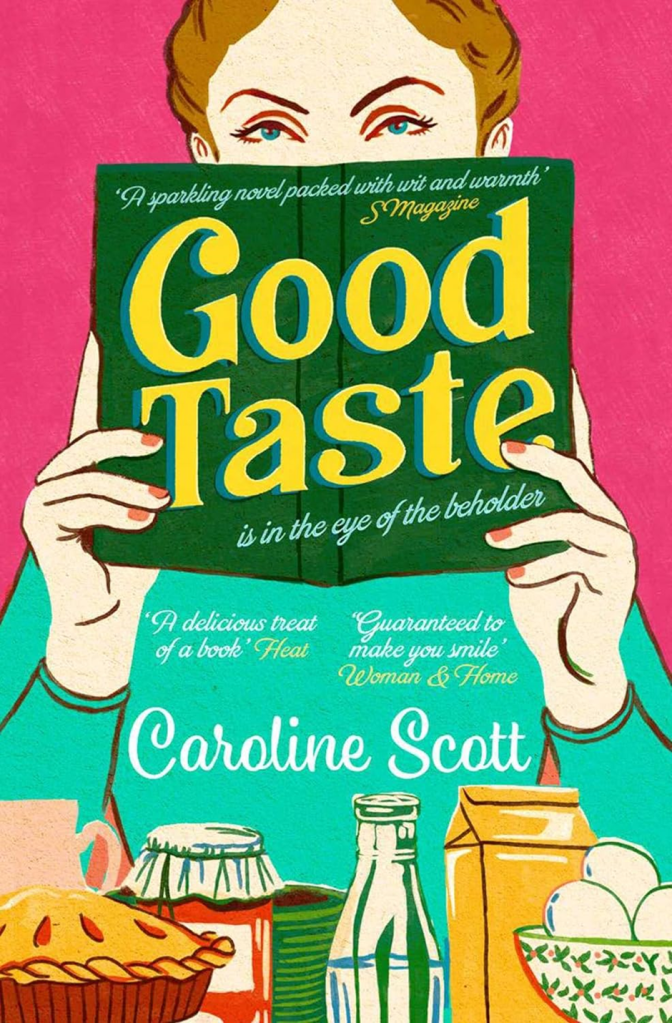
England, 1932, and the country is in the grip of the Great Depression. Food journalist Stella Douglas has just received a commission to write a history of English cookery. As she launches her research, Stella feels like she’s setting out on an exciting new adventure; she sees herself motoring around the country, visiting the kitchens of ancient farmers’ wives, millers, cheese mongers and market gardens. But what she discovers is rissoles, gravy, stewed prunes and lots of oatcakes. Then when her car breaks down and the dashing antiques dealer Freddie springs to her rescue, she is led in a very different direction…
Full of wit and vim, Good Taste is a story of discovery, of English nostalgia, change and challenge, and one woman’s desire to make her own way as a modern woman.
(Published by Simon & Schuster, UK, in hardback in October 2022 and in paperback in July 2023. To be published by William Morrow, US, November 2023.)
‘A delicious treat of a book! The book sings with gorgeous period details that take the reader into 1930s England, and stir a sense of nostalgia. Lively, poignant, witty and beautifully written, and all driven by a wonderful character in Stella Douglas, I couldn’t stop turning the pages.’ Hazel Gaynor
‘A fascinating, immersive, and delicious treat of a book’ heat (book of the week)
‘Evocatively written and laugh-out-loud funny, it’s guaranteed to make you smile’ Woman’s Weekly
‘Beautifully written, this sparkling novel is packed with wit and warmth’ S Magazine
‘Scott has done an amazing job of drawing on real stories to craft a powerful novel’ Good Housekeeping
‘. . . the perfect antidote to these darker days when the news is bleak and the weather bleaker . . . This is a nicely paced yarn shot through with nostalgia but with themes which nevertheless resonate today… A tasty treat’ Mirror, The Friday Book Club
‘A fun, colourful read . . . laugh-out-loud funny, it’s guaranteed to make you smile’ Woman & Home
‘Wonderful on nostalgia, doing things your own way and maintaining faith. I raced through it’ Daily Mail
The Visitors
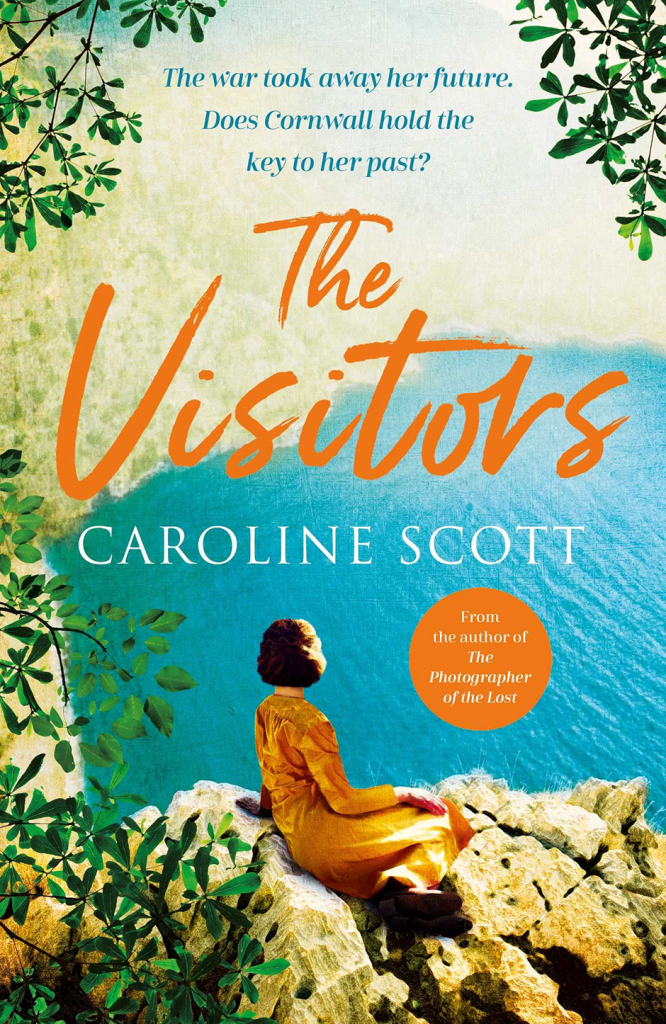
From the highly acclaimed author of The Photographer of the Lost, a BBC Radio 2 Book Club Pick, comes a tale of a young war widow and one life-changing, sun-drenched visit to Cornwall in the summer of 1923…
Esme Nicholls is to spend the summer in Cornwall. Her late husband Alec, who died fighting in the war, grew up in Penzance, and she’s hoping to learn more about the man she loved and lost.
While there, she will stay with Gilbert, in his rambling seaside house, where he lives with his former brothers in arms. Esme is fascinated by this community of eccentric artists and former soldiers, and as she gets to know the men and their stories, she begins to feel this summer might be exactly what she needs.
But everything is not as idyllic as it seems – a mysterious new arrival later in the summer will turn Esme’s world upside down, and make her question everything she thought she knew about her life, and the people in it.
Full of light, laughter and larger-than-life characters, The Visitors is a novel of one woman finally finding her voice and choosing her own path forwards.
When I Come Home Again
‘A page-turning literary gem about grief, loss and the impact of war on those left behind’, The Times, Best Books of 2020.
One Great War soldier with no memory.
Three women who claim him as their own.
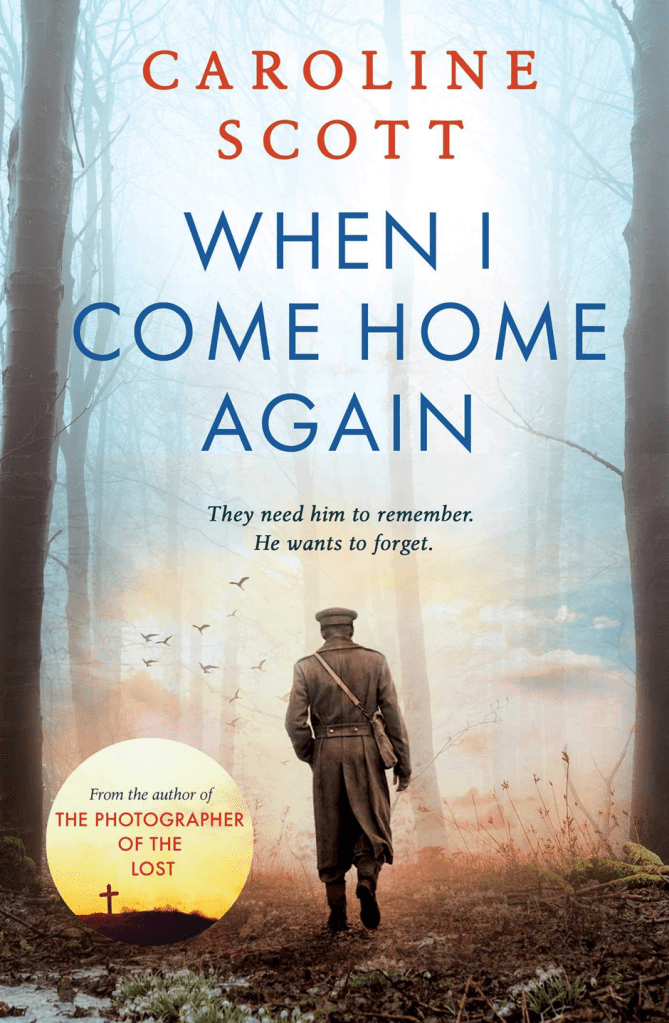
1918. In the last week of the First World War, a uniformed soldier is arrested in Durham Cathedral. When questioned, it becomes clear he has no memory of who he is or how he came to be there.
The soldier is given the name Adam and transferred to a rehabilitation home. His doctor James is determined to recover who this man once was. But Adam doesn’t want to remember. Unwilling to relive the trauma of war, Adam has locked his memory away, seemingly for good.
When a newspaper publishes a feature about Adam, three women come forward, each claiming that he is someone she lost in the war. But does he believe any of these women? Or is there another family out there waiting for him to come home?
Based on true events, When I Come Home Again is a beautiful and compelling story about love, loss and longing in the aftermath of war, perfect for fans of Maggie O’Farrell and Helen Dunmore.

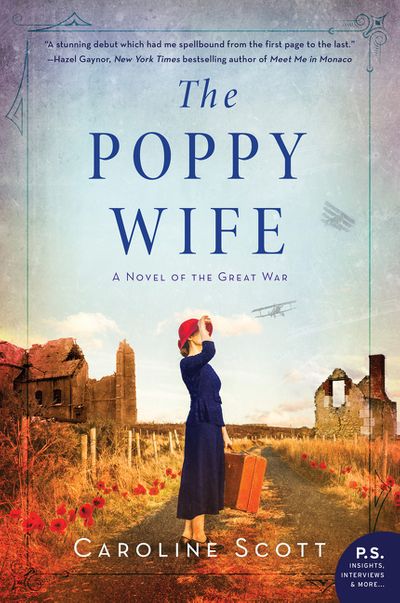
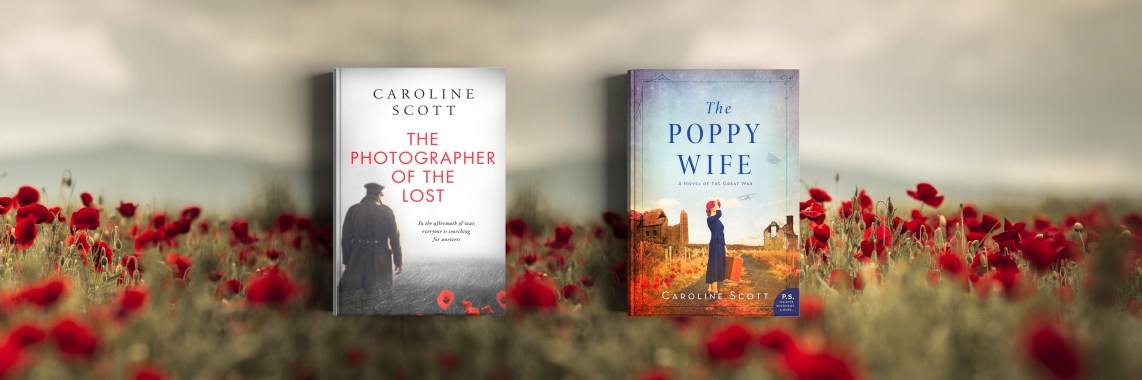
The Photographer of the Lost (UK version) / The Poppy Wife (US version)
In the aftermath of war, everyone is searching for answers.
1921. The Great War is over and families are desperately trying to piece together the fragments of their broken lives. While many survivors have been reunited with their loved ones, Edie’s husband Francis has not come home. He was declared ‘missing, believed killed’ during the war, but when Edie receives a mysterious photograph in the post, taken by Francis, hope flares. And so she beings to search.
Francis’ brother, Harry, is also searching. Hired by grieving families to photograph gravesites, as has returned to the Western Front. As Harry travels through battle-scarred France, gathering news for British wives and mothers, he longs for Francis to be alive, so they can forgive each other for the last conversation they ever had.
And as Harry and Edie’s paths converge, they begin to get closer to a startling truth.
An incredibly moving account of an often-forgotten moment in history, The Photographer of the Lost is an epic novel of forbidden love, loss and the shattered lives left behind in the wake of the First World War.
Publishers: Simon & Schuster UK (October 2019) / William Morrow US (November 2019)
Retailers:
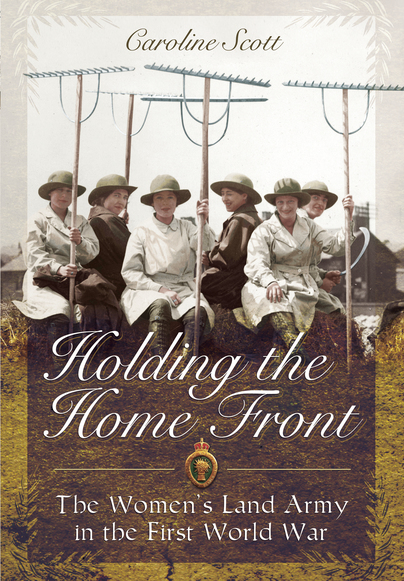
Holding the Home Front. The Women’s Land Army in The First World War
In recent years the Second World War’s land girl has caught the public imagination. We’ve seen her in films, television series and novels. We might be misremembering her, we might have distorted her image into one that suits a twenty-first century audience, but we haven’t forgotten. Other things have been forgotten, though. One could be forgiven for supposing that the story of the Women’s Land Army starts in 1939. But it’s a much older and more complicated history.
British agricultural policy during the First World War was held up as a success story; coming through a great national emergency, domestic food production was higher at the end of the war than at the start, the average calorific value of the British diet barely changed and bread never had to be rationed here. As the press reported starvation and food riots overseas, the 1918 harvest was held up as one of the great achievements of the War.
In 1917, at the darkest hour, when Britain’s food security looked most precarious, it was said that, If it were not for the women agriculture would be absolutely at a standstill on many farms. Is that true? Were women really keeping the wheels turning? Using previously unpublished accounts and photographs, this book is an attempt to understand how the return of women to the fields and farmyards impacted agriculture – and, in turn, an examination of how that experience affected them.
This is the story of the First World War’s forgotten land army.
Publisher: Pen & Sword Books (2017)
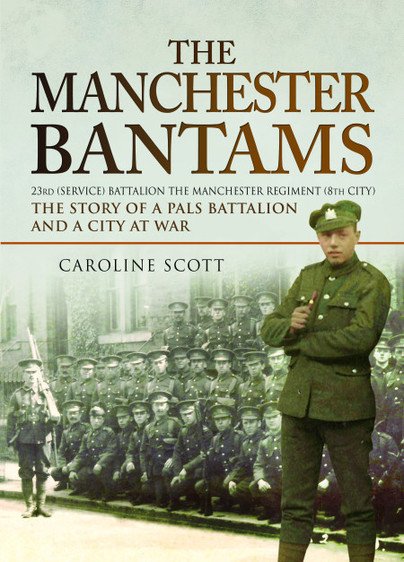
In May 1916 Major Eustace Lockhart Maxwell, a former Indian cavalry officer, was given command of an infantry battalion in France. After 48 hours with his new unit, Maxwell wrote to his family: ‘The outstanding characteristic of those who belong to it seems to be their extraordinary self-complacency! Esprit de corps is a fine thing, but the satisfaction with which they regard themselves, their battalion, its internal economy, its gallantry, its discipline, its everything else, is almost indecent! If at the end of a month my opinion of them is half as good as their own, I shall think myself uncommonly lucky.’ This was the 23rd Manchester ‘Bantam’ Battalion, a unit entirely composed of men of a height between 5ft and 5ft 3”, and its esprit de corps was about to be severely tested.
The ‘Bantams’ left colourful, characterful, moving and often amusing records of their experiences. Using a wealth of previously un-published sources, this book follows the Manchester men through their training, their experiences of the Somme and the Third Ypres Campaign, to Houthulst Forest where, in October 1917, the Battalion was ‘practically annihilated’.
Publisher: Pen & Sword Books (2017)
Those Measureless Fields
Captain Laurence Greene was gassed at Ypres. He takes ten years to die. With her fiancé, Joseph, lost in France, Effie Shaw spends a decade as Laurence’s cook. They share a roof, a sweet tooth and a taste for pastoral romances. But propriety dictates that their sharing must end there. It is a surprise to Effie, then, when Laurence’s will leaves her a railway ticket, the deeds to a tea shop and a declaration of his unspoken love.
The terms of Laurence’s bequest require that Effie must travel to Ypres and visit her fiancé’s grave. As Laurence told it, Joseph met his end with a show of heroics. But, in carrying out Laurence’s last requests, and following his wartime diary, Effie is about to discover something shocking: Joseph wasn’t quite as heroic as she was told – and he also isn’t quite so dead.
The stories of three soldiers connect through Laurence’s diary. As Effie travels on, from Passchendaele to Paris, these men become linked together once again. A decade on from the Armistice, is the war really over at all? Effie is about to realise just how many echoes – and untidy ends – 1918 has left behind.
‘Those Measureless Fields’ is a sucré-salé story about love, war, cake and canine smuggling. It’s a novel about a woman setting out on a journey – and about three men who are trying to finish one.
Publisher: Pen & Sword Books (2014)
 Caroline Scott